

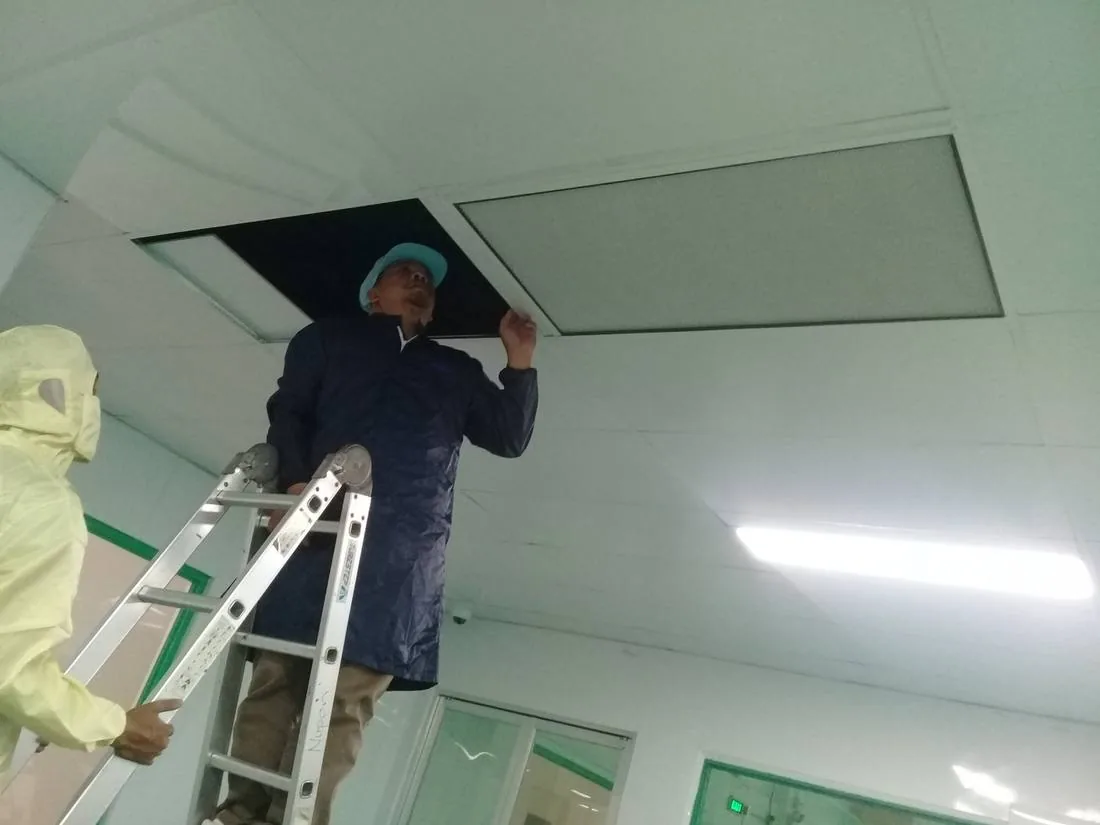
Technician holding a handheld instrument to a cleanroom ceiling. NuPON project photograph.
Cleanroom Testing Services
NEBB-Certified Cleanroom Testing and Validation in the Philippines
Measured room performance, documented against the agreed criteria, for handover, requalification and investigation of controlled environments in the Philippines.
NEBB certification and project references →
A cleanroom is accepted, released and kept in service on the strength of its measured performance. NuPON tests cleanrooms and clean zones and reports the results against the classification, airflow, pressure, filter and environmental criteria you specify.
Each test is scoped to your rooms, your required occupancy state and your governing specification. You receive a written report that your engineering and QA teams can review, file and act on.
Service Scope
What cleanroom testing and validation covers at NuPON
The commercial phrase covers a defined set of room performance tests and the documentation that supports your qualification programme. Here is the actual scope.
At NuPON, "cleanroom testing and validation" means performance testing of the room as installed.
The core scope is airborne particle counting and classification, airflow volume or velocity with the calculated air change rate, room differential pressure, installed HEPA and ULPA filter leakage, airflow visualization, temperature and relative humidity, and light and sound levels where your specification includes them.
Two services sit outside that core and are scoped separately when you need them.
Airborne microbial sampling addresses viable contamination, which a particle counter cannot measure. ESD assessment of floors, workstations and grounding follows its own standards and is described on its own page.
Recovery testing and containment leak testing are not part of the scope described on this page.
If your protocol calls for them, state it with the inquiry so that NuPON can say whether and how they can be scoped.
Three things are not part of the service.
Design qualification and process validation are written by your own team, not by NuPON. Regulatory approval and the release of a facility for production are decisions NuPON does not make. Biological safety cabinets, isolators and other devices have their own certification methods; room testing does not certify them. Test results and records can be attached to your own installation, operational or performance qualification protocol; the quotation states which documents NuPON executes and which remain with your team.
Company Background
Founded in 2000, with offices near the industrial zones
Cleanroom design-build, filtration equipment and engineering services for Philippine manufacturers, run from a Laguna head office and offices near the main industrial zones.
Year 2000.
NuPON Technology Phils. Corp. was founded in the Philippines.
Offices.
Head office in Santa Rosa, Laguna, with offices in General Trias (Cavite), Olongapo City (Subic), Mabalacat City (Clark), Mandaue City (Cebu) and Baguio City.
NEBB Certified Testing
NEBB cleanroom testing and certification
We test your cleanroom under the NEBB Procedural Standards and hand over a NEBB certified report, for customers and specifications that require it.
Planned around your production.
We agree the rooms, tests and occupancy state with your engineering and QA team, then test within your shutdown or production window. If a result misses its criterion, our cleanroom engineers can investigate it as separate work.
What the NEBB certificate records.
The area tested, the ISO 14644-1 class and the result, the occupancy state, the standards applied (the NEBB Procedural Standards and ISO 14644), the date of certification and the next test due under your programme.
A NEBB Certified Professional signs it.
The results are reviewed and the report authenticated before it is issued. NEBB, the National Environmental Balancing Bureau, has certified testing firms and professionals since 1971.
NEBB project references
Cleanrooms we have tested and certified under NEBB procedures.
Manufacturing plants, a medical device manufacturer, a government facility and state universities.
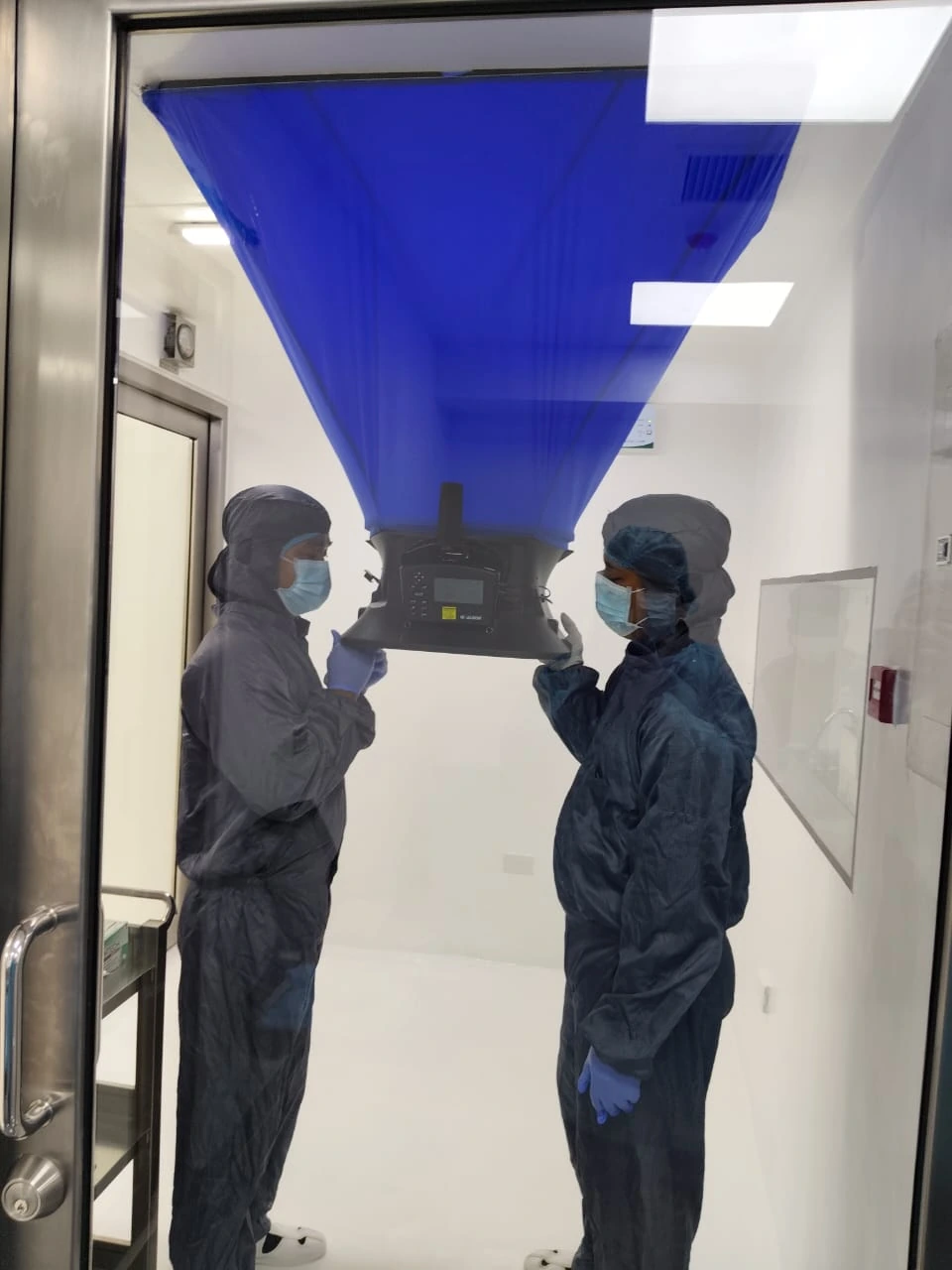
ISO 5
Class 100
State university, Camarines Sur.
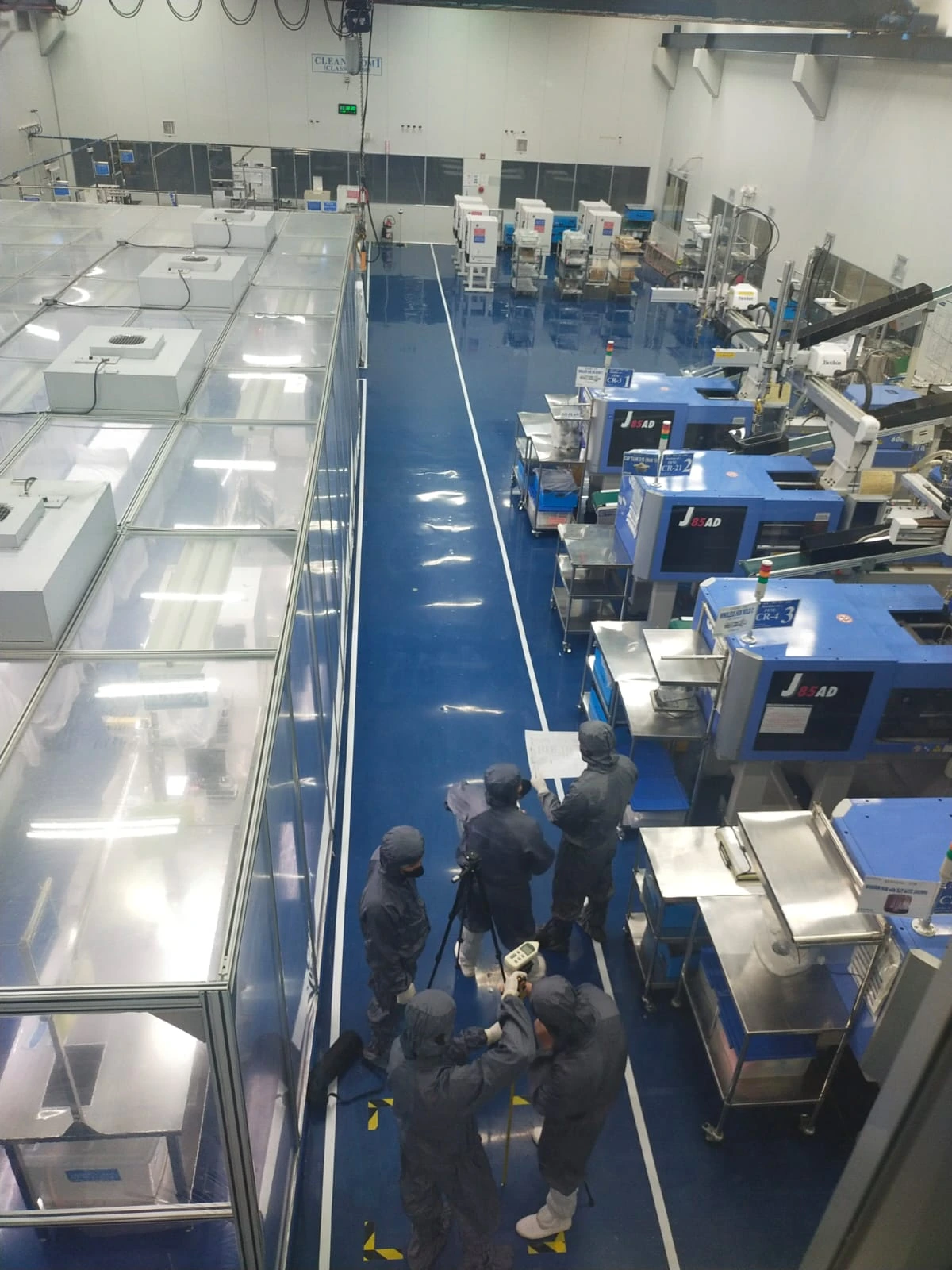
ISO 7
Class 10,000
Manufacturing plant, Batangas.
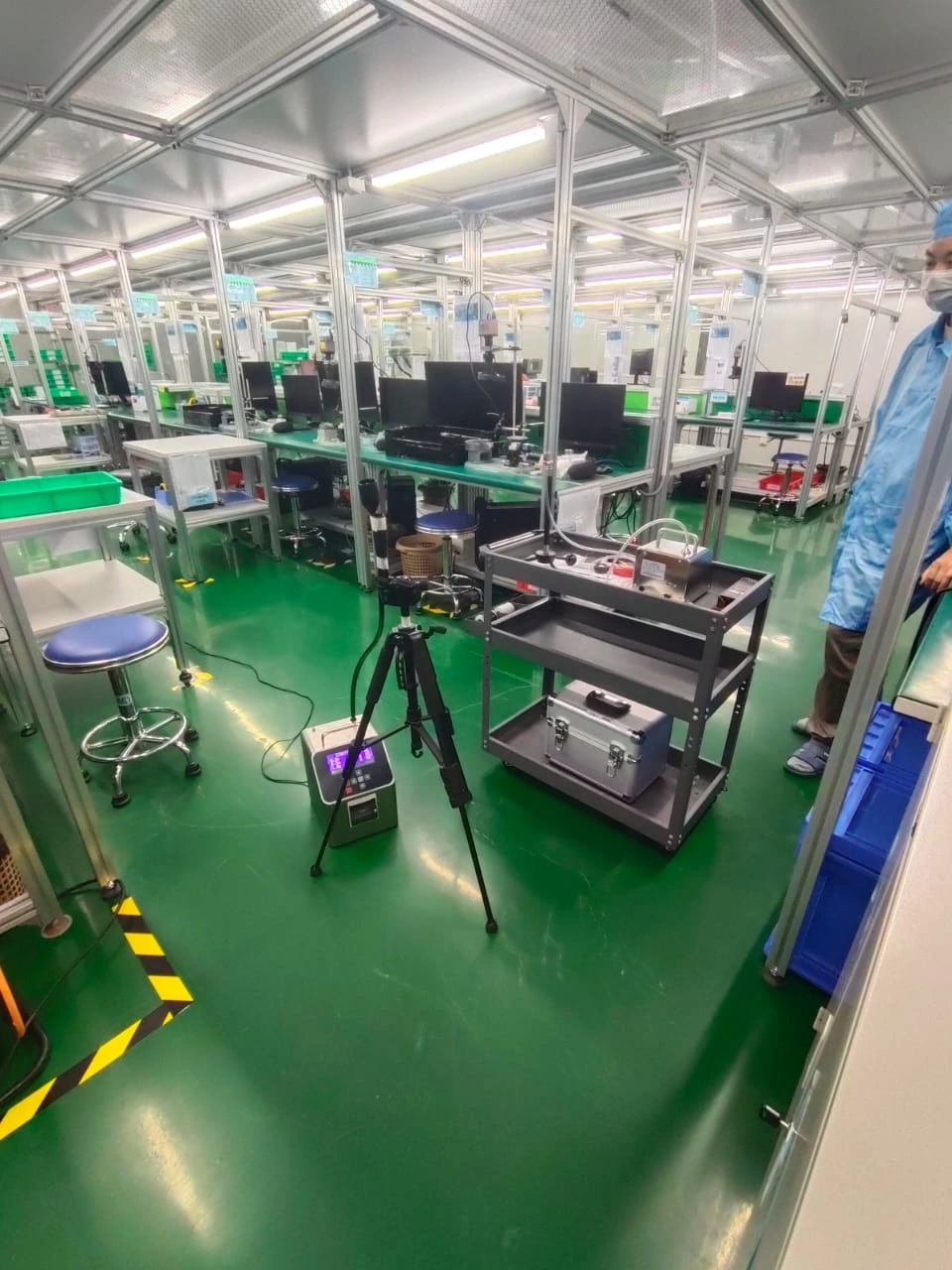
ISO 7
Class 10,000
Manufacturing plant, Subic.
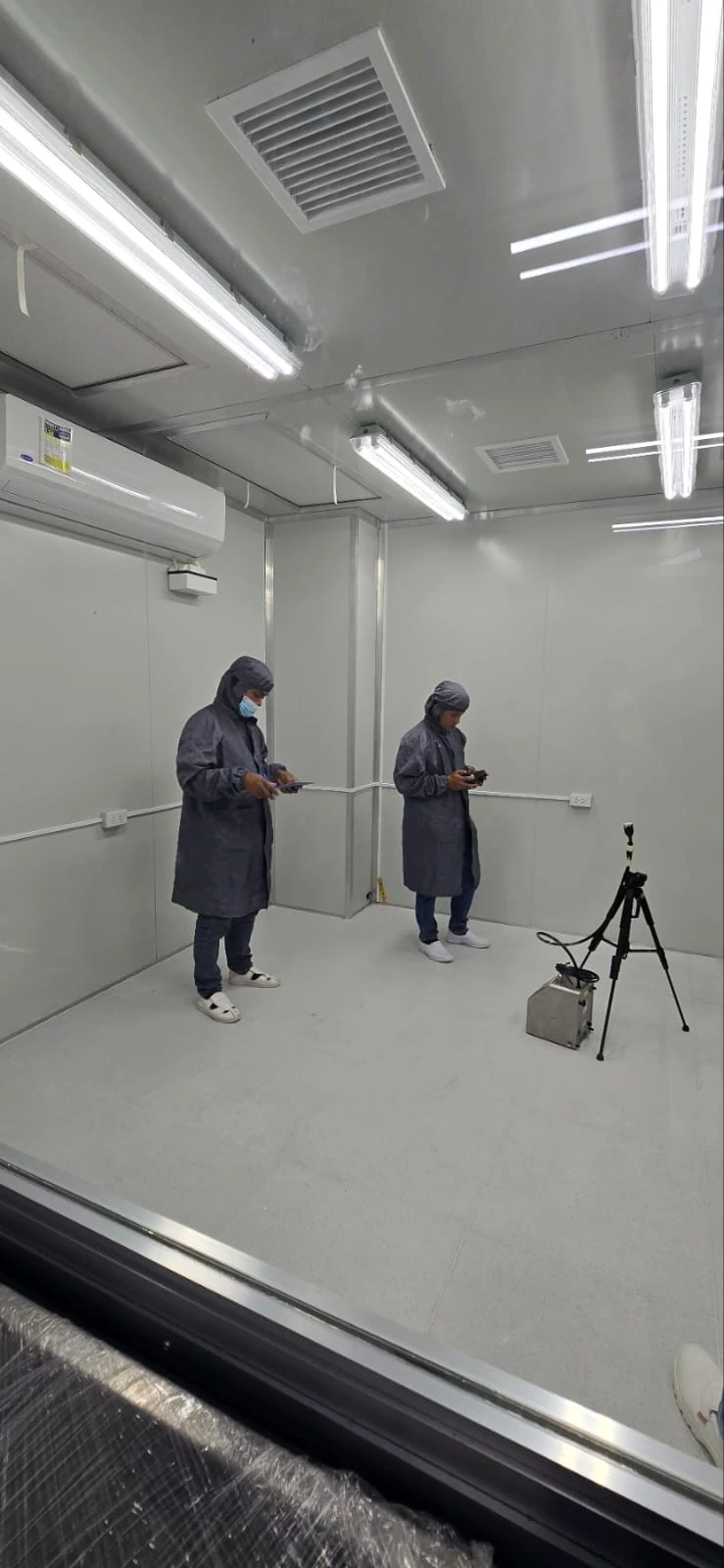
ISO 8
Class 100,000
Medical device manufacturer, Makati City.
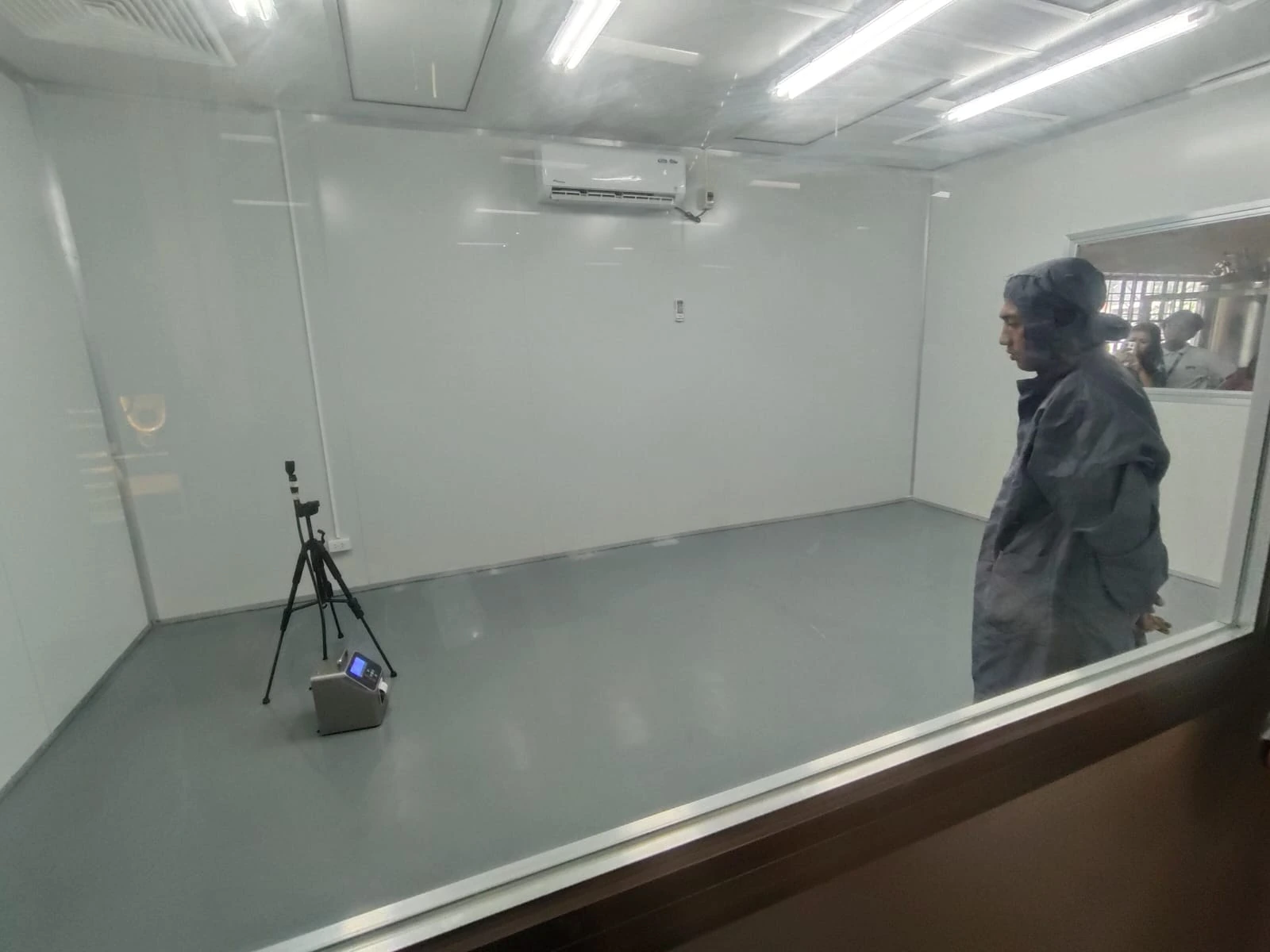
ISO 8
Class 100,000
Government facility, Taguig City.
ISO 8
Class 100,000
Electronics manufacturer, Batangas.
ISO 5
Class 100
State university, Quezon City.
Testing Triggers
When a cleanroom needs testing or requalification
Four situations call for documented measurement: handover of a new room, periodic reassessment, verification after a change, and investigation of a performance concern.
Handover of a new or renovated cleanroom
Before you accept the room from the contractor, measured results against the specification show whether the installation does what the design promised. If NuPON built the room, this is our handover testing. If another contractor built it, we test it to the same specification.
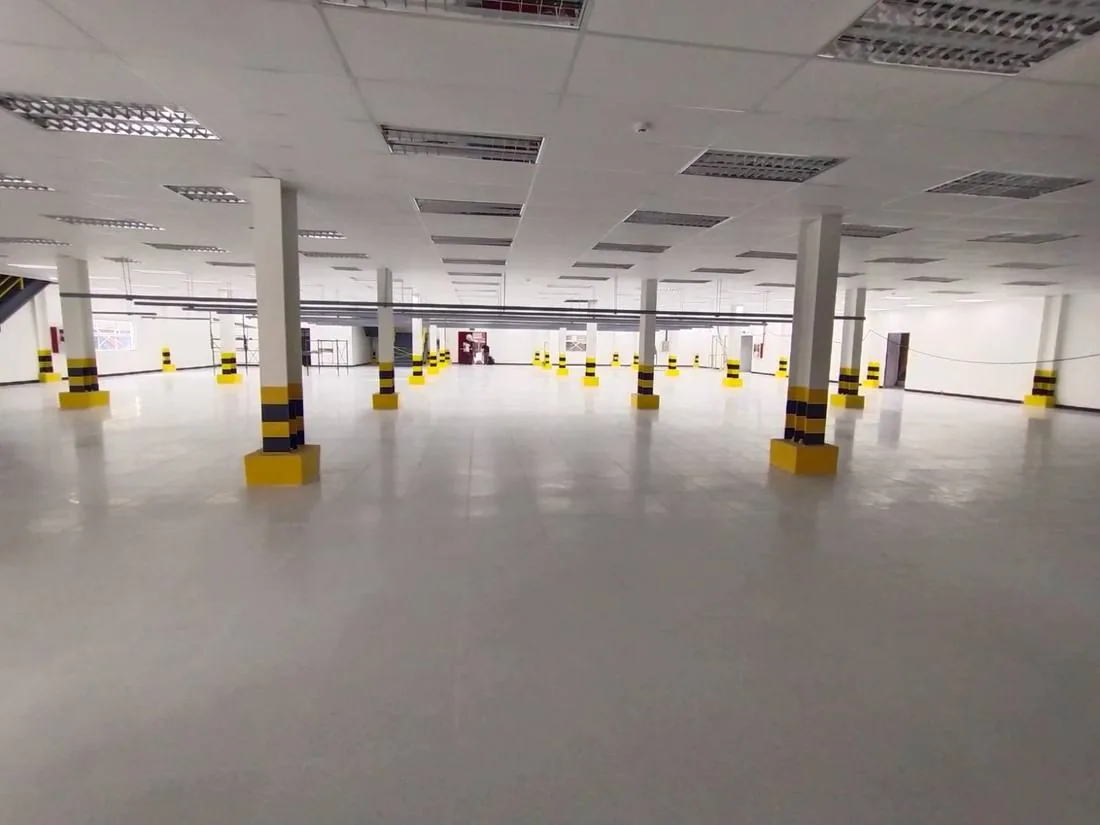
Periodic reassessment
Your approved programme, your customer’s requirements or the GMP guide your facility operates under set the interval. The interval is not the same for every facility, and NuPON does not prescribe one. We test to the programme you hold.
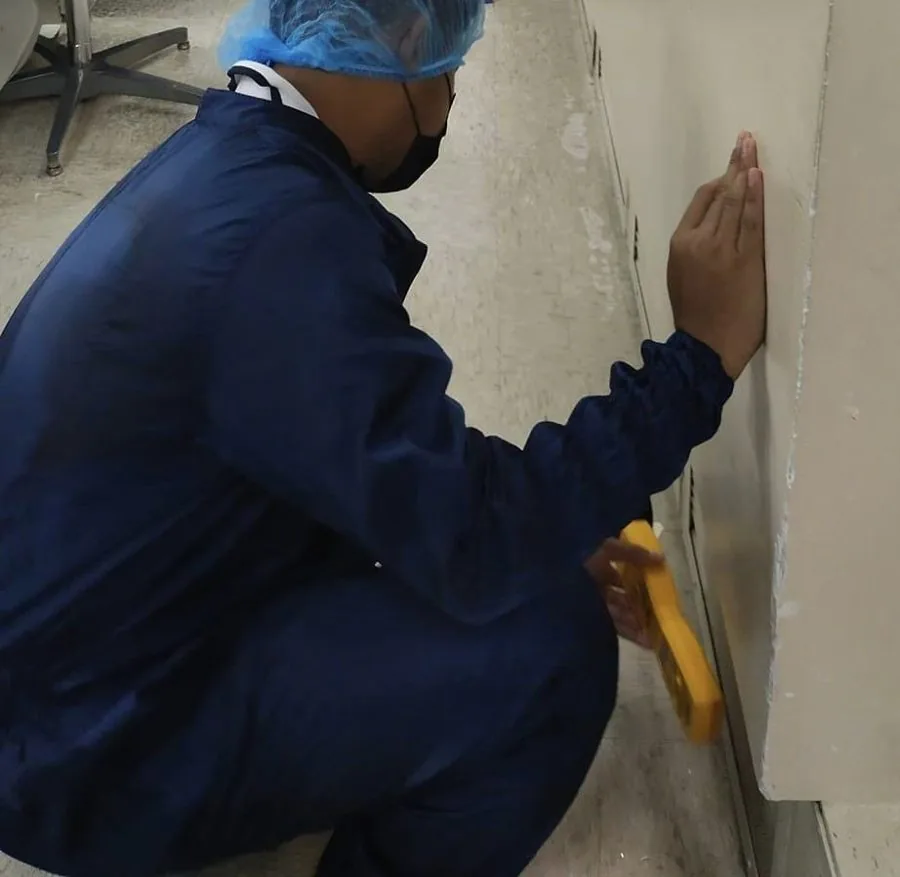
After a change
Filter replacement, HVAC rebalancing, new equipment, partition changes, a long shutdown. The extent of retesting depends on what changed and on your change control procedure. Replacing two ceiling filters may need only a leak test on those filters and a pressure check. A new partition may mean reclassifying the whole room.
A performance concern
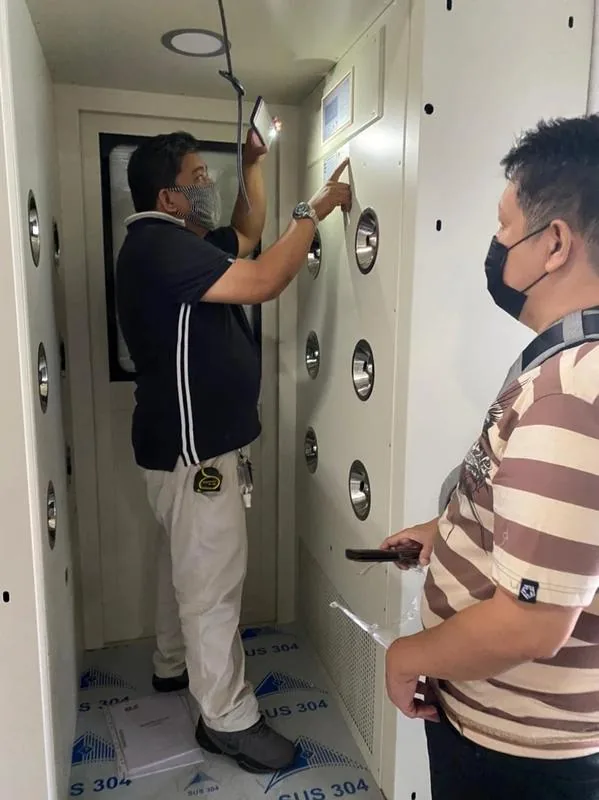
Rising particle counts, a pressure alarm, condensation on a wall, an audit observation. Testing scoped to the symptom gives your engineering team measured data to work from. Where the cause lies in the HVAC or the enclosure, NuPON’s engineering team can be engaged separately for investigation and corrective work.
Test by Test
What each test establishes
Every test has a purpose, a measured parameter, applicable conditions, an acceptance basis and a report output. None of them establishes the others.
Particle count, airflow, pressure and filter leakage tests can also be performed and certified under NEBB procedures.
Airborne particle counting and ISO 14644-1 classification
Purpose:
to determine whether the air in the room meets the selected ISO 14644-1 class for the selected particle sizes, in the stated occupancy state.
What is measured:
particle concentration at and above the selected sizes, between 0.1 µm and 5 µm, at sampling locations spread across the room, using a light scattering airborne particle counter. The standard sets how many sampling locations a room of your floor area needs and how much air each sample must draw, so a larger room or a tighter class takes longer to classify.
Conditions recorded:
room identity, class and particle sizes, occupancy state, HVAC status, equipment status and the number of people present.
Acceptance basis:
the ISO 14644-1:2015 class limits for the selected sizes, or the limits written in your specification.
Report output:
the sampling location plan, the counts at each location, the class limit, and a statement of whether the room met the class under the recorded conditions.
What it does not establish:
a particle count says nothing about viable organisms, product sterility, surface cleanliness or chemical contamination. It describes the air at the sampled locations during the sampling period.
Airflow volume, velocity and air change rate
In a non-unidirectional room, the relevant measurement is usually the supply air volume at each terminal. The air change rate is then calculated against the room volume taken from your drawings or measured on site. In a unidirectional zone, under a filter ceiling or a laminar flow grid, the relevant measurement is the face velocity and its uniformity across the filter area.
Which measurement applies, and what value is acceptable, comes from your specification or design. No single velocity or air change figure applies to every cleanroom, and NuPON does not apply one. The report lists the volume or velocity at each terminal or grid point, the totals, the calculated air change rate where requested, and the comparison with the specified value.
Air change rate is a design and balance check. It does not substitute for particle classification.
Room differential pressure
The pressure difference between each identified room and its adjacent space is measured in the units and sign convention your specification uses. Positive pressure is usual where the product must be protected from the surroundings. Some rooms, such as those handling potent or hazardous materials, are designed negative to the corridor. The test checks direction and magnitude against the design, with doors closed and the HVAC in the agreed operating condition, and can include a comparison of your installed gauges against the test instrument.
Report output:
a pressure map of the tested rooms and adjacent spaces, with the design value beside each measured value.
Installed HEPA and ULPA filter leakage testing
Purpose:
to confirm that the installed filter, its gasket or seal and its frame do not pass unfiltered air.
NuPON performs this test with a PSL (polystyrene latex) aerosol challenge introduced upstream of the filter and measured downstream using the total leakage method. The aggregate penetration through the installed filter is compared with the acceptance criterion in your specification. If your specification or your filter type calls for a different method, state this when you request a quotation so that the method and the acceptance basis can be agreed before testing.
What it does not establish:
a factory test certificate for the filter element describes the element before shipment. The installed test describes the ceiling as fitted. The room’s particle class is a separate measurement again; a leak-free filter does not by itself classify the room.
Access:
the test needs an upstream injection point and downstream access to the filter face. Fan filter units, ceiling modules and ducted terminals differ. Tell us the filter count, type and access arrangement with your inquiry.
Airflow visualization
A visible tracer, commonly called a smoke test, is released at agreed points so that airflow direction and behaviour can be observed: whether air at doorways and pass-throughs moves outward toward the less clean side, whether a unidirectional zone stays unidirectional around equipment and operators, and where turbulence or reverse flow appears.
The output is a photographic or video record with the observation points marked and the observations described. Visualization shows how air moves. It does not count particles and is not evidence of class or sterility.
Temperature and relative humidity
Readings are taken at the agreed locations and compared with the ranges in your specification. Spot readings describe conditions at the time of the test. If your process needs evidence of stability across shifts or HVAC cycles, logging over a defined period is a different scope; state it with your inquiry so that it can be defined and quoted.
Light and sound levels
Supplementary measurements, included where your specification or procedure calls for them: illuminance at the working plane and sound level at the agreed locations, compared with the specified values. They describe the working environment and have no bearing on the room’s particle class.
Airborne microbial sampling as a separate scope
Viable contamination is assessed by collecting air samples, and surface samples where specified, on growth media, then incubating and counting the colonies. This is a separately scoped service with its own sampling plan, media, incubation and reporting arrangement, defined with you before quotation. Particle counts and microbial counts are different measurements and are reported separately.
Scope and Criteria
Test conditions and acceptance criteria
A result only means something against a written scope: which rooms, which class, which occupancy state, which standard or specification, and which limits apply.
As built, at rest and operational
Three occupancy states are used in cleanroom testing.
As built: the installation is complete and the services are running, but no production equipment, materials or personnel are in the room.
At rest: the equipment is installed and operating as agreed, with no personnel present.
Operational: the equipment is running and personnel are working in the agreed manner.
GMP documents call the third state in operation; the meaning is the same for the purposes of a test scope.
The same room can meet its class at rest and exceed it in operation, because people and processes generate particles. Your required state is written into the scope and printed beside every result.
What the scope must define
Before testing, the following are confirmed with you and written into the quotation:
- Room or zone identifiers, dimensions and intended use, from your drawings or a site survey.
- The required class and the particle sizes to be counted, or the GMP grade and the sizes it specifies.
- The occupancy state, and the HVAC, equipment and personnel conditions that go with it.
- The standard, client specification, user requirements specification or approved protocol that governs the test methods and the limits.
- For filter testing, the filter count, type and access arrangements.
- The units and limits that any conformity statement will be made against.
Where your specification has no limit for a particular test, NuPON says so and agrees a basis with you before testing. A figure is not borrowed from another standard or another industry and applied to your room.
Four Terms, Four Scopes
Testing, classification, qualification and monitoring are different things
Buyers often ask for certification when they need classification, or for validation when they need test records. The distinctions change the scope and the price.
Testing
is measurement with a stated method under stated conditions.
Classification
is one specific test result: the room’s air assessed against an ISO 14644-1 class, for selected particle sizes, in one occupancy state. It establishes airborne particle cleanliness and nothing else.
Qualification
is documented verification that a facility, system or item of equipment meets its defined requirements, carried out within an approved framework. It is usually written in stages: design qualification (DQ), installation qualification (IQ), operational qualification (OQ) and performance qualification (PQ). NuPON’s contribution is the execution of the physical tests and the records your protocol calls for: test data, instrument details, conditions and results, in a form your quality team can attach to the protocol. Protocol authorship, approval and the process validation that follows remain with your organization unless a different arrangement is agreed in writing.
Monitoring
is the ongoing programme of measurements between formal tests, planned under ISO 14644-2 or under your GMP requirements, using your own installed or portable instruments and your own procedures. NuPON’s test reports can serve as reference points in that programme. They do not replace it.
Certification,
as the word is used commercially, means the document you receive. NuPON issues its own test report and, where requested, a test certificate. We also offer NEBB certified cleanroom testing and validation: tests performed to the NEBB Procedural Standards, with the report signed by a NEBB Certified Professional. None of these documents is issued by ISO or a regulator, and none releases a facility for production.
Report Deliverables
What the test report contains
The report is the product. Its value is letting an engineer or auditor see what was tested, how, under what conditions and with what result.
Your quotation lists the report contents for your scope. Use the checklist below to compare any testing proposal, including ours.
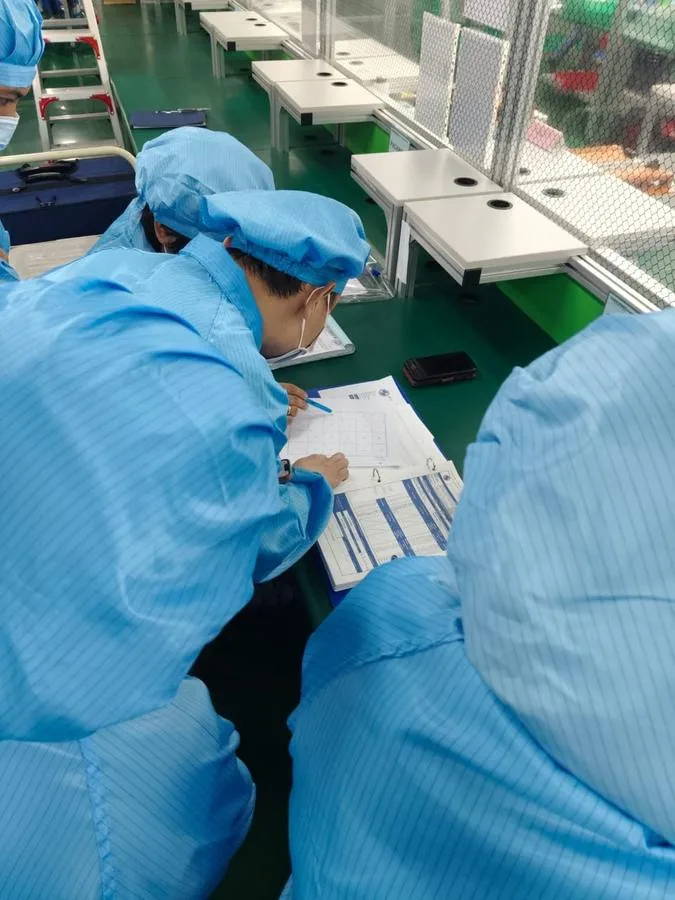
- The approved scope and the documents it references.
- Room identifiers and a test location plan.
- Test dates, occupancy state and the HVAC, equipment and personnel conditions at the time of testing.
- The method and acceptance criterion applied to each test.
- Instrument identifiers and calibration references.
- Measured results with units, and the calculations behind derived values such as air change rate.
- Findings against the agreed criteria, test by test and room by room.
- Deviations, limitations and any location that could not be tested, with the reason.
- Photographs or airflow visualization records where included in the scope.
- The names of the person who performed the tests and the person who reviewed and authorized the report.
- Where a retest was carried out, the original result, the corrective action recorded by your team, and the retest result.
Results that do not meet a criterion are reported as measured. They are not removed from the report, repeated without record or replaced by a later pass. How a failed result is handled is described in the next section.
For a NEBB certified report, the contents and format follow NEBB reporting requirements.
Project Sequence
How a cleanroom testing project runs
The sequence below is what to expect between sending your requirement and receiving findings, including what happens when a result misses the criterion.
Before testing
- You send the requirement through the form on this page, with any floor plan, specification or previous report.
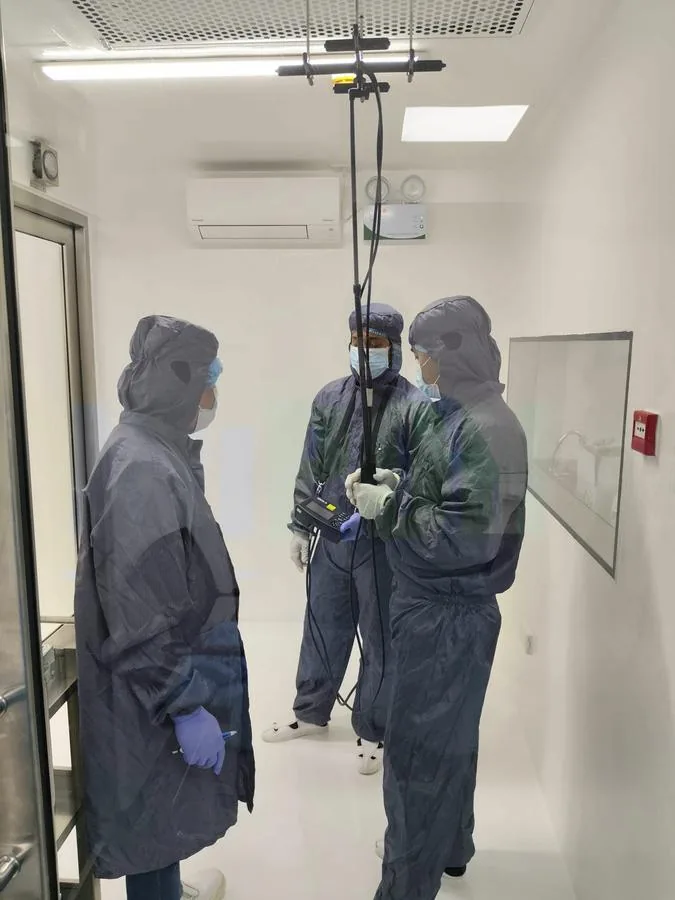
- A NuPON engineer confirms the rooms, the class and particle sizes, the occupancy state, the governing specification, the filter arrangement and your preferred testing window. A site visit is arranged where the drawings do not answer these questions.
- The quotation lists each test, the rooms it covers, the acceptance basis, the report contents and the schedule. Corrective work and retesting are priced separately, so the testing fee does not change if a result fails. The report type is agreed at this stage: a NEBB certified report or a standard test report.
- Site preparation is agreed in writing: the HVAC running and stable for the agreed period beforehand, the room cleaned to the agreed condition, equipment set to the agreed status, filter access clear, and personnel and gowning arranged if operational testing is required. Testing in the as built or at rest state normally needs the room free of production. Operational testing needs production running as agreed.
During testing
Instruments are identified and the room conditions are recorded before the first measurement. Airflow, pressure and filter tests are normally completed before particle classification, because a leaking filter or an unbalanced supply changes the counts. Observations are shared with your representative on site as the work proceeds, so that an obvious problem, such as a door left open or a filter leak, can be dealt with before the classification run rather than discovered in the report.
When a result falls outside the criteria
The measured value stays in the report with its location, conditions and time. NuPON records the conditions observed at the time, such as an open door, a filter leak or a low supply volume, without diagnosing beyond what was measured. Your team decides on investigation and corrective action. NuPON’s engineering group can be engaged for that work as a separate service, whether or not NuPON built the room.
After corrective work, a retest of the affected tests is quoted and recorded as a retest, referencing the original result. A test is not repeated until it passes and then reported as if it had passed the first time.
Facility Types
Facilities and industries NuPON tests
The same room tests apply across industries; the class, occupancy state and governing document change. These are the facility types NuPON’s cleanroom work serves.
Electronics and semiconductor assembly. Surface mount lines, wafer handling, IC assembly, optical inspection and final packaging areas, where particle class, airflow at workstations and ESD control are usually specified together.
Optical fibre, precision and communication components. NuPON’s ISO Class 7 validation project in Subic is in this sector.
Pharmaceutical, biotechnology and laboratory facilities. Testing scoped to the grade, occupancy states and qualification programme the facility operates under, with microbial sampling defined as a separate scope.
Medical device manufacturing and packaging. Room testing against the facility’s own specification, with the records your quality system requires.
Food processing and healthcare facilities with controlled zones. The same tests, scoped to the facility’s own hygiene or design requirements rather than to pharmaceutical grades.
1 of 5
Reference Documents
Standards referenced in the scope
The quotation names the documents the tests follow. ISO, IEST and EN standards apply when the project specification calls for them. Philippine drug manufacturers follow the PIC/S GMP Guide, adopted through DOH Administrative Order No. 2012-0008 and implemented by the FDA.
ISO 14644-1:2015
Used for
Classification of air cleanliness by particle concentration: class limits, particle sizes, number of sampling locations and sample volume
Does not establish
Viable contamination, surface cleanliness or any requirement beyond airborne particles
ISO 14644-2:2015
Used for
Monitoring plans that show continued performance related to particle concentration; the basis for your programme between formal tests
Does not establish
A single retest interval for every facility
ISO 14644-3:2019 (corrected version, 2020)
Used for
Test methods for airflow, pressure, installed filter leakage, airflow visualization, temperature, humidity and other performance tests
Does not establish
Which tests you must run; your specification decides that
ISO 21501-4:2018 with Amendment 1:2023
Used for
Calibration and verification of the light scattering airborne particle counters used for classification
Does not establish
The competence of the testing organization
IEST-RP-CC006.4 (2026) and IEST-RP-CC034.5 (2022)
Used for
Supporting guidance on cleanroom testing and on HEPA and ULPA filter leak testing, where your specification references them
Does not establish
Mandatory requirements; they are recommended practices applied by agreement
NEBB Procedural Standards for Certified Testing of Cleanrooms
Used for
Test procedures and reporting for a NEBB certified report, when your specification, customer or corporate standard names NEBB.
Does not establish
Regulatory approval, release of the facility for production, or laboratory accreditation.
EN 1822-1:2019 and ISO 29463-1:2024
Used for
Classification and factory testing of the filter element
Does not establish
Performance of the filter as installed, or the room’s class
EN 17141:2020
Used for
Biocontamination control in cleanrooms, the reference for viable microbial sampling where it applies; it replaced the EN ISO 14698 series
Does not establish
Anything about non-viable particle classification
WHO TRS 1010 Annex 8 (2018) and TRS 1019 Annex 2 (2019)
Used for
HVAC qualification guidance for non-sterile pharmaceutical facilities, including the tests an HVAC qualification covers and a risk-based basis for requalification frequency
Does not establish
Requirements for sterile products or for non-pharmaceutical cleanrooms
EU GMP Annex 1 (2022, in operation since 25 August 2023), the PIC/S GMP Guide and Annex 15
Used for
Sterile medicinal product manufacturing: grade limits at rest and in operation, the tests a cleanroom qualification includes, maximum requalification intervals by grade and the qualification stages, for facilities subject to them
Does not establish
Requirements for electronics, optical or other industrial cleanrooms
ISO, IEST, EN and WHO documents apply because your specification or protocol calls for them. Regulatory applicability is specific to your facility. The Philippine FDA adopts the PIC/S GMP Guide through Administrative Order 2012-0008 and names the edition in force by advisory; that edition and the conditions of your licence govern a pharmaceutical facility. Confirm them with your regulatory team and state them in the scope.
Selection Criteria
Why facilities choose NuPON for testing
Specific reasons you can check: a defined scope, a report built for review, an engineering team behind the measurements, offices near the industrial zones.
Scope before price.
Every quotation lists the tests, the rooms, the occupancy state, the acceptance basis and the report contents, so two proposals can be compared line by line.
A NEBB route when your customer asks for one.
Where a specification, customer or corporate standard names NEBB, we deliver NEBB-certified testing with a NEBB certified report, quoted alongside our standard testing.
One company behind the enclosure, the filtration and the testing.
NuPON designs and builds cleanrooms, supplies and installs fan filter units and HEPA filters, and maintains air showers and HVAC systems. When a test finds a problem, the engineering team that can investigate it is in the same company, engaged as a separate service.
That dual role is also stated plainly: if NuPON built your room, our testing is contractor handover testing, not an independent third-party assessment. If your quality system requires an independent assessment, say so at quotation, and NuPON will state plainly whether it can meet that requirement for your project.
Offices near the work.
Head office in Santa Rosa, Laguna, and offices in Cavite, Subic, Clark, Cebu and Baguio, so a site visit before quotation is usually practical. Scheduling and site visits are agreed at quotation.
Common Questions
Questions buyers ask about cleanroom testing
Conditional answers, because the right answer depends on your scope, your facility and the governing document.
What is included in the quoted testing scope?
Exactly what the quotation lists: the rooms, each test, the occupancy state, the acceptance basis and the report contents. The core scope is the room performance tests described on this page. Microbial sampling and ESD assessment are added as separate line items when you need them. Corrective work and retesting are not included in a testing quotation unless the quotation says so.
What is the difference between testing, classification and qualification?
Testing is measurement by a stated method under stated conditions. Classification is one result from testing: the room’s air against an ISO 14644-1 class for chosen particle sizes in one occupancy state. Qualification is the documented verification of a facility or system against its requirements within an approved framework, usually in design, installation, operational and performance stages. NuPON executes tests and supplies records; the framework and its approval belong to your quality system.
Is particle counting enough to qualify a cleanroom?
No. A classification result shows airborne particle cleanliness at the sampled locations in the stated state. Qualification normally also needs evidence that the installation matches the design (airflow, pressure, filter integrity, environmental conditions), that the documents and approvals are in place and, for pharmaceutical facilities, that the microbiological and operational requirements are met. Pharmaceutical protocols may also call for recovery or containment leak tests, which are outside the scope described on this page; state them at inquiry. Which tests your protocol needs is decided by your specification, not by the particle count.
What do as built, at rest and operational mean?
As built: installation complete, services running, no equipment, materials or people in the room. At rest: equipment installed and operating as agreed, no people present. Operational, called in operation in GMP documents: equipment running and people working in the agreed manner. The state decides what a result means and is recorded with each result. Handover testing is often done as built or at rest; performance during production can only be shown in the operational state.
How are tests and acceptance criteria selected?
They come from your governing document: a client specification, a user requirements specification, an approved qualification protocol, the ISO 14644-1 class you have chosen, or the GMP grade your facility operates under. NuPON lists the proposed tests and the criterion for each in the quotation. Where your document is silent on a test, we agree a basis with you before testing rather than applying a figure from elsewhere.
Do you test installed HEPA and ULPA filters?
Yes. The installed filter, its seal and its frame are challenged upstream with a PSL aerosol and measured downstream using the total leakage method, and the result is compared with the criterion in your specification. The filter count, type and access arrangement are needed to quote. A factory test certificate for the filter element does not replace this test, and the test does not classify the room.
Is microbiological sampling included?
Not in the core scope. Airborne microbial sampling, and surface sampling where specified, is a separately scoped service with its own sampling plan, media, incubation and reporting arrangement, agreed with you before quotation. Viable counts are reported separately from particle counts because they measure different things.
What report or certificate will we receive, and who issues it?
NuPON issues a written test report with the contents listed in your quotation and, where requested, a test certificate for the agreed scope. For our NEBB certified cleanroom testing and validation service, the tests follow the NEBB Procedural Standards for Certified Testing of Cleanrooms and the NEBB certified report is signed by a NEBB Certified Professional. None of these documents is issued or approved by ISO, a regulator or an accreditation body, and none releases the facility for production.
Do you offer NEBB certified cleanroom testing?
Yes. NuPON offers NEBB certified cleanroom testing and validation, covering particle count classification, airflow, room pressure and HEPA filter leak testing. The tests follow the NEBB Procedural Standards for Certified Testing of Cleanrooms, together with ISO 14644-3, and the report is signed by a NEBB Certified Professional. Mention NEBB certified testing in your inquiry so the quotation includes it. Not sure which report applies? Send the specification and we will tell you.
Can the results support our QA review or qualification programme?
Yes, as records. The report identifies the scope, conditions, methods, instruments, results and findings so that your QA or validation team can attach it to a protocol, use it as a reference point in a monitoring programme, or produce it in an audit. Whether the results satisfy your programme is a judgement your quality system makes against its own criteria.
Does NuPON provide IQ, OQ or PQ support?
NuPON executes the physical tests that an installation, operational or performance qualification protocol calls for and supplies the records in a form that can be attached to the protocol. Protocol authorship, review and approval remain with your organization unless a different arrangement is agreed in writing. Design qualification, process validation, cleaning validation and sterilization validation are outside the service.
Can you test a cleanroom installed by another contractor?
Yes. The room is tested to the same specification regardless of who built it. If the original design documents are incomplete, the scope is based on your current requirements and a site survey. Where a result points to the installation, NuPON’s engineering team can be engaged for investigation as a separate service.
What must be prepared before testing?
The items agreed in the quotation: HVAC running and stable for the agreed period, the room cleaned to the agreed condition, equipment in the agreed status, clear access to filters and sampling locations, drawings or room identifiers available, and personnel and gowning arranged if operational testing is required. A NuPON engineer confirms this list with you before the test date.
Does production need to stop?
It depends on the occupancy state you need. As built and at rest testing normally requires the room free of production. Operational testing requires production running in the agreed manner. Where a facility cannot stop, testing can often be scheduled into a maintenance window or across shifts. State your constraints with the inquiry so the schedule can be planned around them.
How often is reassessment required?
No single interval applies to every cleanroom. The interval comes from three places: your own approved programme or quality system, built on a monitoring plan of the kind ISO 14644-2:2015 describes and on your risk assessment; your customers’ requirements; and, for facilities subject to pharmaceutical GMP for sterile products, the GMP guide itself. EU GMP Annex 1 (2022) sets maximum requalification intervals of 6 months for grade A and B areas and 12 months for grade C and D areas, and requires requalification after remedial action or relevant changes (clause 4.32); the PIC/S GMP Guide carries the same text from PE 009-17. Separately from any interval, reassessment is triggered by change: filter replacement, HVAC work, room alterations, significant maintenance, a long shutdown or a performance excursion. For a Philippine pharmaceutical facility, the edition of the PIC/S GMP Guide the FDA has put into effect and your licence conditions decide which text applies, so confirm it with your regulatory team. NuPON tests to the programme you hold and does not prescribe a universal interval.
What happens if a result does not meet the criteria?
The result stays in the report with its location, conditions and time. NuPON records the conditions observed at the time without diagnosing beyond the measurements. Your team decides on investigation and corrective action; NuPON’s engineering group can be engaged for that separately. A retest of the affected tests is quoted and reported as a retest that references the original result. NuPON does not promise a passing result and does not repeat a test until it passes without a record.
What affects cost, scheduling and report turnaround?
The number of rooms and their floor area, which sets the sampling locations and sample volumes for classification; the class and particle sizes; the occupancy state; the number of filters and their access; the supplementary tests included; the number of sites and their distance from the nearest NuPON office; access windows and shutdown constraints; and the report format your protocol requires. Each of these appears in the quotation. Report turnaround is agreed per project; NuPON does not publish a standard duration because it depends on the scope.
What information is needed for a quotation?
Company and contact details; project location; the reason for testing; the rooms and their approximate dimensions; the required class or grade and occupancy state if known; the governing specification or protocol; the filter count, type and access; any temperature, humidity or pressure criteria; the last report if one exists; and your preferred testing window. Attach drawings, specifications or previous reports where you have them. “Not sure” is an acceptable answer; a NuPON engineer will work through the gaps with you.
Do you certify biological safety cabinets, laminar flow benches or isolators?
Room testing does not certify these devices. Each has its own certification standards and field test methods, and a room result says nothing about a cabinet’s containment or product protection. If you need device certification alongside room testing, say so with the inquiry and NuPON will state whether and how it can be scoped.
Are ISO classes the same as GMP grades?
No. ISO 14644-1 classes are defined by particle concentration limits at selected particle sizes in a stated occupancy state. GMP grades A to D, as defined in EU GMP Annex 1 and the PIC/S GMP Guide, carry their own particle limits for their own particle sizes, separately at rest and in operation, together with microbiological and operational requirements that ISO classes do not include. A grade is often described with reference to an ISO class at a given particle size and state, but the comparison holds only under those conditions. State the governing document with your inquiry so the scope applies the right limits.
Start Your Inquiry
Request a cleanroom testing quotation
Tell us the rooms, the reason for testing and, if known, the required class and occupancy state. Attach a floor plan or previous report.
Attach a floor plan or a previous report if you have one.
What happens next: a NuPON engineer reviews your requirement and attachments, contacts you to confirm the rooms, the required class and state, the governing specification, the filter arrangement and the testing window, and then prepares a quotation that lists each test, the report deliverable and the schedule.